News & Blog
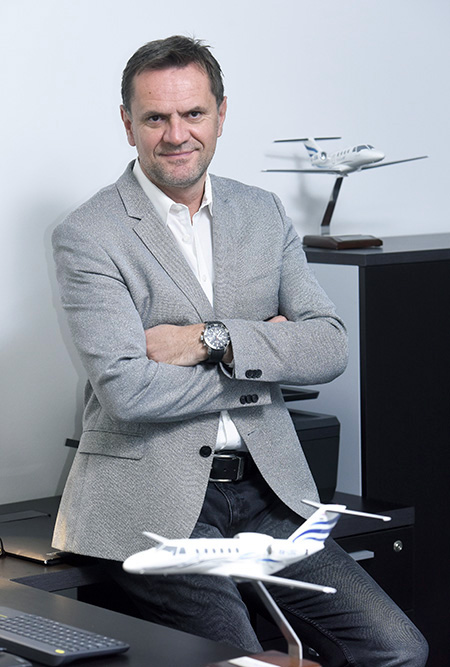
Jasna Jung: Brokers expect us to always keep proving their trust in us was warranted

Chartering an aircraft is no longer a luxury, it is more of a business necessity. Chartering a boat is not a luxury either, at least judging by the many booking inquiries. But in both cases, the high amounts passengers are willing to pay are counted on. This is the beginning of an article originally published on March 6, 2026 in the "Business & Tourism" special by Lider magazine. The title of the article, copied down below in full, was "Jets are rising above the Adriatic" and the author of the text is Sergej Abramov.
------
The most common association with luxury tourism in Croatia are the massive yachts. These vessels are most often chartered, and they are linked to other business lines within the luxury tourism segment. Surely you don’t think the owners or lessees of these yachts spend their time on transoceanic or Mediterranean sailing tours? Their lives are programmed months in advance, including the arrival at and departure from the destinations where their magnificent vessel is located. This is where private air charter operators, the so-called business aviation, have found their niche, finding clients primarily among business people - high-level owners and managers - who are seeking fast, reliable and discreet service.
The Charms of Business Aviation
Business aviation is a specific and complex business. The mere fact that it involves flying, coordination, aircraft maintenance, and aircraft management separates this branch of luxury tourism apart from others. Furthermore, when you add the special expectations of high-net-worth clientele, accustomed to high levels of similar services in the West - the complexity of the business increases even more.
As Jasna Jung, a board member and CFO of Jung Sky, explained to us, every flight is a story of its own, and every detail, from the type of aircraft to discretion, can have an impact. However, something else is crucial.
- Both passengers and the brokers expect us to justify their trust, which means they demand that we be reliable, transparent in communication, quick in execution when necessary, and efficient in resolving any obstacles that may arise during the flight. They also expect an impeccably professional crew with strong social and interpersonal skills. All other expectations are of the cosmetic type – says Jung.
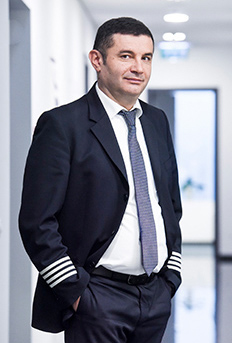
Our second interviewee, Dorian Delić, shares similar experiences. This young man, a third-generation pilot from the Delić family company, Delić Air, highlighted the ability to adapt to clients as the most important skill. Namely, the exclusive segment is diverse; while some clients prioritize lower prices, most enjoy choosing because they have the means to pay.
- An increasing part of the market sets the general condition of the aircraft, its age, cabin tidiness, and standard food and beverage offerings as imperatives. What all clients have in common is the expectation of punctuality and flexibility. Last-minute schedule changes are frequent, and our ability to adapt has secured long-term cooperation with many clients - Delić pointed out.
The Role of the Brokers
We suspected that luxury charter is not just a matter of aesthetics and status symbol, and from the experiences of these two domestic companies it is clear that this is a logistics product for a select audience. Delays due to prior meetings, rushes caused by changes in schedule or destination, and specific services in the air and at airports - all of this is usually coordinated between the operator and the broker(s) to whom clients entrust the organization of their trip. Sometimes, as Jung pointed out, these are various types of destination management agencies, VIP or concierge agencies, and occasionally, though rarely, the clients themselves. The experience at Delić Air is the same.
- Sometimes we cooperate directly with the end user – the passenger, but most often details are communicated and negotiated with the help of travel intermediaries – the brokers, who are, in this case, specialized in business jets. Except for rare cases where a hotel or yacht operator contacts us which, unfortunately is not an established line of cooperation and therefore there is significant room for progress in that segment - Delić stated.
Jung also pointed out this deficiency emphasizing that there are already enough luxury villas, hotels, hotel chains, and yachts in Croatia, as seen during summer months when the media regularly report on whose vessels are moored in local ports or who has been spotted in Dubrovnik, Hvar, or Trogir. The market is there, but are there any door-to-dock practices?
- In case of Jung Sky operations, there are no established "door-to-dock" verticals and practices; instead, it is handled on a case-by-case basis. To establish such practices, we would need more aircraft in the fleet because that enables greater control and flexibility of the schedule. Our passengers mostly use brokerage services for their private jet needs and whether they also hire brokers for "door-to-dock" services, we don't know, but there is surely some of that because brokers and brokerage companies often have multiple departments covering different segments of the experience - Jung noted.
The Passengers
According to the experiences of Lider's interviewees, luxury charter clientele are primarily foreigners traveling for business or vacation, some of whom combine private flights with staying on a yacht or a skiing vacation. Typically, these are entrepreneurs and company owners or company management, and somewhat less frequently athletes, musicians, or individuals from the film and television industry. Croatian entrepreneurs are less frequent users of air charter services and most often use them for business obligations for destinations that are not so well connected, or when a private jet flight is the most efficient transfer method in terms of the time-to-cost ratio. In summer and winter, the motivation is more frequently tourism, while in spring and autumn, it is business. The most common destinations in Croatia are coastal.
- In summertime, Croatian coastal airports are a popular choice for our passengers. For example, last year, out of a total of 136 destinations we flew to from June to September, Dubrovnik and Zadar were among the top ten, with Split being very close. Looking at the past two years and across all seasons - Dubrovnik, Zadar and Split were among the top twenty destinations out of 260 total. Generally, in summer, the Croatian coast's share of flights is roughly on par with the Greek islands although both countries are behind France, primarily due to the French Riviera and Nice, which has been one of our strongest destinations for years. However, even France is behind Italy, whose destinations have been the strongest in our operations during the company's sixteen-year history - Jung stated.

A Shortage of People
Although it may initially seem like an ideal job because passengers are willing to pay well for their whims, business aviation in Croatia faces several difficulties and challenges that hinder its development. In this niche, as in other sectors in Croatia, the shortage of personnel is a chronic issue that is hard to treat.
- I would cite the lack of people as the main problem, starting with quality pilots - who mostly choose the stability of larger airlines over business aviation and its dynamics, then air traffic controllers - whose numbers are decreasing from generation to generation, all the way to logistics roles - such as ground staff at airports which are indispensable cogs in the system. All of this reduces the number of slots, for which big commercial aviation has priority. In summer and at certain airports, slots can be unavailable for business jets for over a month, which is unacceptable for a client willing to pay several thousand euros - Delić stated. Jung added that business aviation is often troubled by regulations tailored to regular commercial aviation, without adapting them to the dynamics of private charter operators.
Both noted the potential in the growing recognition of business aviation within infrastructure activities, which has begun to bear fruit, such as the strengthening of infrastructure for business aviation reception, namely the provision of special VIP terminals.
Room for Improvement
Despite the problems, like the lack of a brokerage service offering a wide range of exclusive, comprehensive solutions - as warned by Dorian Delić - Croatia has enough arguments for the development of business aviation beyond just the attractiveness of the coast. According to Jasna Jung's assessment, prices in Croatia are favourable compared to European competition, and local expertise and knowledge are valued globally.
- Some might say we lag behind in the number of airports, especially on the islands, but one must consider how much smaller Croatia is in terms of surface area compared to other countries. To some extent, that remark is understandable because our passengers want to fly directly to their destinations and spend as little time as possible on the action of travelling itself. On the other hand, in Greece, which has three times as many airports on the islands and the coast, airport fees are often very high and complications with slots are frequent, which can significantly affect the overall travel experience - said Jung, adding that it hasn't yet been realized in Croatia how important business aviation is for tourism. If they want to attract high-net-worth guests, those whose expertise is destination management could influence the inclusion of business aviation into the range of offerings.
View previous news:
Recommendation:
Other:
Here, you book yourself the always interesting Jung Sky newsletter which keeps you in touch with all the nice things that are happening to us. Don't worry, we won't be a nuisance, smooth flying is the only way we roll.